One of the most common questions I hear from lot owners and residents is: "Where do our strata levies actually go?"
There is often confusion about who receives levy funds, how those funds are allocated, and who is responsible for managing them. Many people assume that strata levies are simply paid to the strata manager or committee, but the reality is more structured.
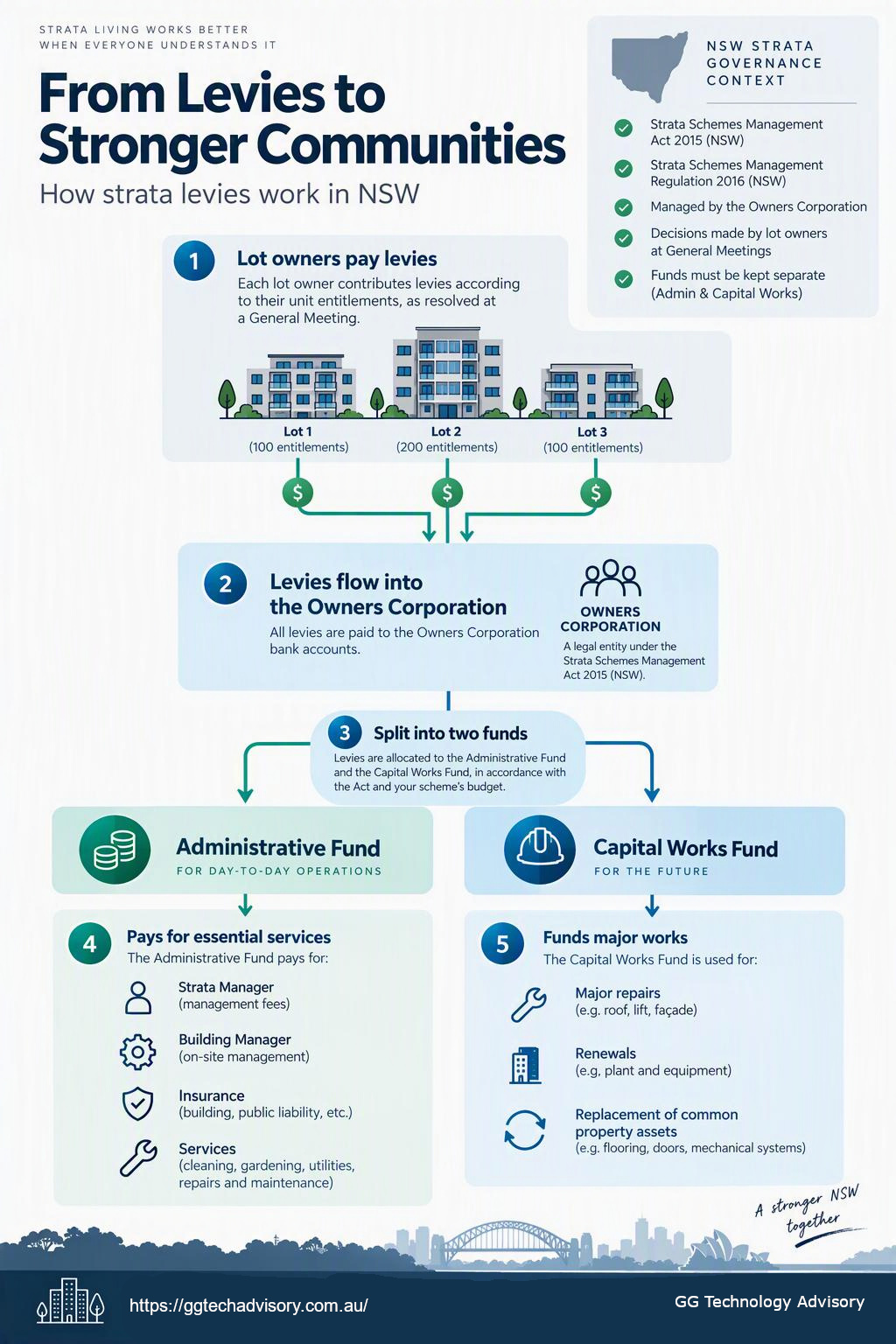
Levies are collected by the Owners Corporation and allocated across two key funding streams: the Administrative Fund, which supports day-to-day operations, and the Capital Works Fund, which protects the long-term condition and value of the building and common property.
Another common misconception is that the Strata Committee is a paid body. In fact, strata committee members are volunteers who contribute their time and expertise to help oversee the financial, operational, and governance responsibilities of the scheme.
Understanding where levy contributions go is fundamental to understanding how a strata scheme operates, how assets are maintained, and how communities protect the value of their properties over time.
The infographic below provides a simple overview of the NSW strata levy flow process and how levy contributions support effective strata asset management.
How levy funds typically flow
- Owners pay levies to the Owners Corporation.
- Administrative Fund covers routine expenses like cleaning, maintenance, insurance, management, utilities, and common-area services.
- Capital Works Fund is reserved for larger lifecycle works such as painting, roof replacement, lifts, façade upgrades, and major building systems.
- Committee oversight helps prioritise spending and ensures funds are used in line with the scheme's long-term planning.
For owners, the key insight is that levies are not simply a cost centre — they are the mechanism by which the building is funded, maintained, and protected. A healthy and well-governed strata scheme depends on both short-term operating funding and long-term capital planning.
When committees have better visibility into where funds are going and how assets are performing, they are better positioned to make informed decisions and avoid reactive spending.